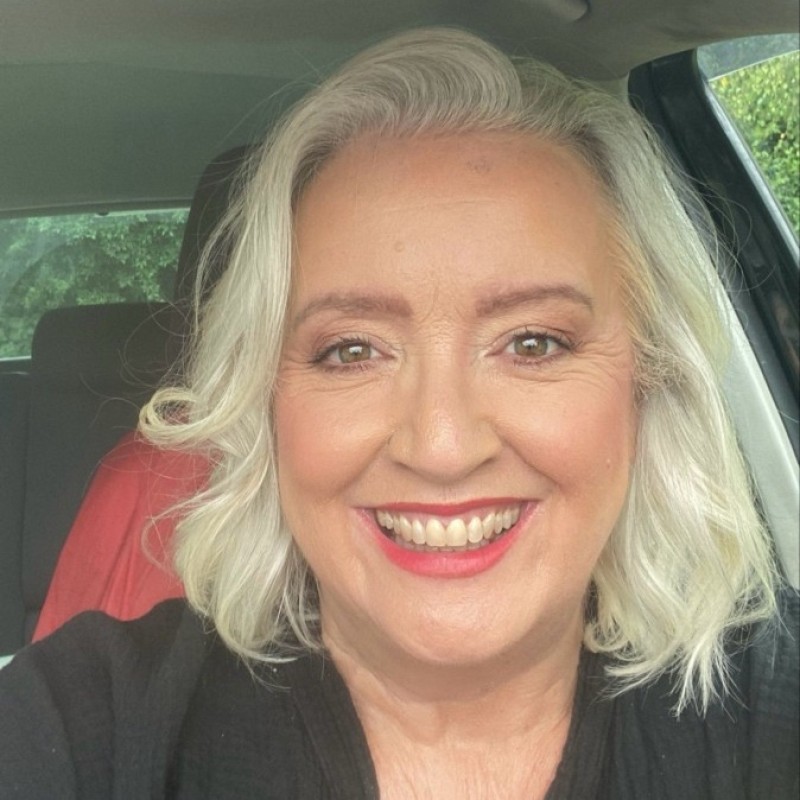
Marie Kirk
Reinventing at every age
Marie doesn't just reject the idea of an expiry date - she refuses to acknowledge the concept of "age" at all. As she approaches 60, she talks about it with enthusiasm, describing it as "turning ten" after resetting her clock in her fifties. She grew up with a mother who surfed at 70 and joined a gym at 80, so it is no surprise that Marie's worldview is shaped by possibility, not limits.
Marie works in the pharmaceutical sector in Ireland, in a company where 68% of employees are under 40. Many people would feel the age gap, but she doesn't: "My manager is half my age - and I learn an enormous amount from her." Her team ranges widely in age and background, but age never features in how they work. She sees this mutual respect and easy collaboration as culture, not training: "If you create an environment where everyone is respected, age becomes irrelevant."
Yet Marie is clear-eyed about the challenges. She remembers being asked, in her early fifties, "At this stage of your life, why are you changing jobs?" - a question that took her breath away. She has heard far worse stories from friends. The problem, she believes, is structural: "People wake up at 50 and suddenly realise they're close to retirement, and they panic. There's no progression path, no conversation, nothing to help them prepare."
Her instinct matches what we see across every sector. When career conversations stop at 50, people become stagnant. They are afraid to move because of pensions, lack of confidence, or simply being unprepared. And in that stagnation, everyone loses. Marie sees it in corporate life: "Companies are losing huge amounts of knowledge because people leave and everything goes out the door with them."
She believes organisations should build "give-back phases" - structured ways for experienced people to pass on skills, mentor, and transfer knowledge into documentation and training programmes. She has seen individuals who would happily return one day a week as contractors, helping on specific projects or coaching new starters. The demand is there; the structure isn't.
Marie also worries about the wider social impact. There is a "glut" of people entering their sixties, but almost nothing in place to support them - neither at work nor in society. And many people hit retirement like a brick wall. She saw it with her father, who had been in a highly structured job and struggled profoundly once the routine stopped. Her mother pushed him to reconnect socially, exercise and reinvent himself, but, as Marie says, "He wasn't prepared. And most people aren't."
Her message is simple: Life is a blank canvas every morning. If you feel stagnant, move. If you need new skills, learn. If someone uses age against you, "you're applying to the wrong company." And above all, build your networks and interests long before you leave work: "We have one life. How you spend it depends on you."
What others can learn from Marie
- Culture beats programmes: Respect, openness and shared purpose erase age barriers more effectively than any formal initiative.
- Start planning early: People should begin thinking about their "next phase" in their early 50s - not three months before they leave.
- Knowledge is an asset - don't lose it: Corporates need structured give-back roles, knowledge-capture processes and transition pathways.
- Intergenerational learning works both ways: Older and younger employees can - and should - mentor each other.
- Reinvention is always possible: Upskill, move roles, try new things. Stagnation is the enemy, not age.
- Retirement should be a transition, not a cliff-edge: Social networks, fitness, purpose and routine matter as much as financial planning.
Want to read more stories like this?
Buy the book, or leave your email to hear first about new stories, case studies and events from Expiry Date Never / Next-Up Ltd.