Essay
Are universities ready for the age of longevity?
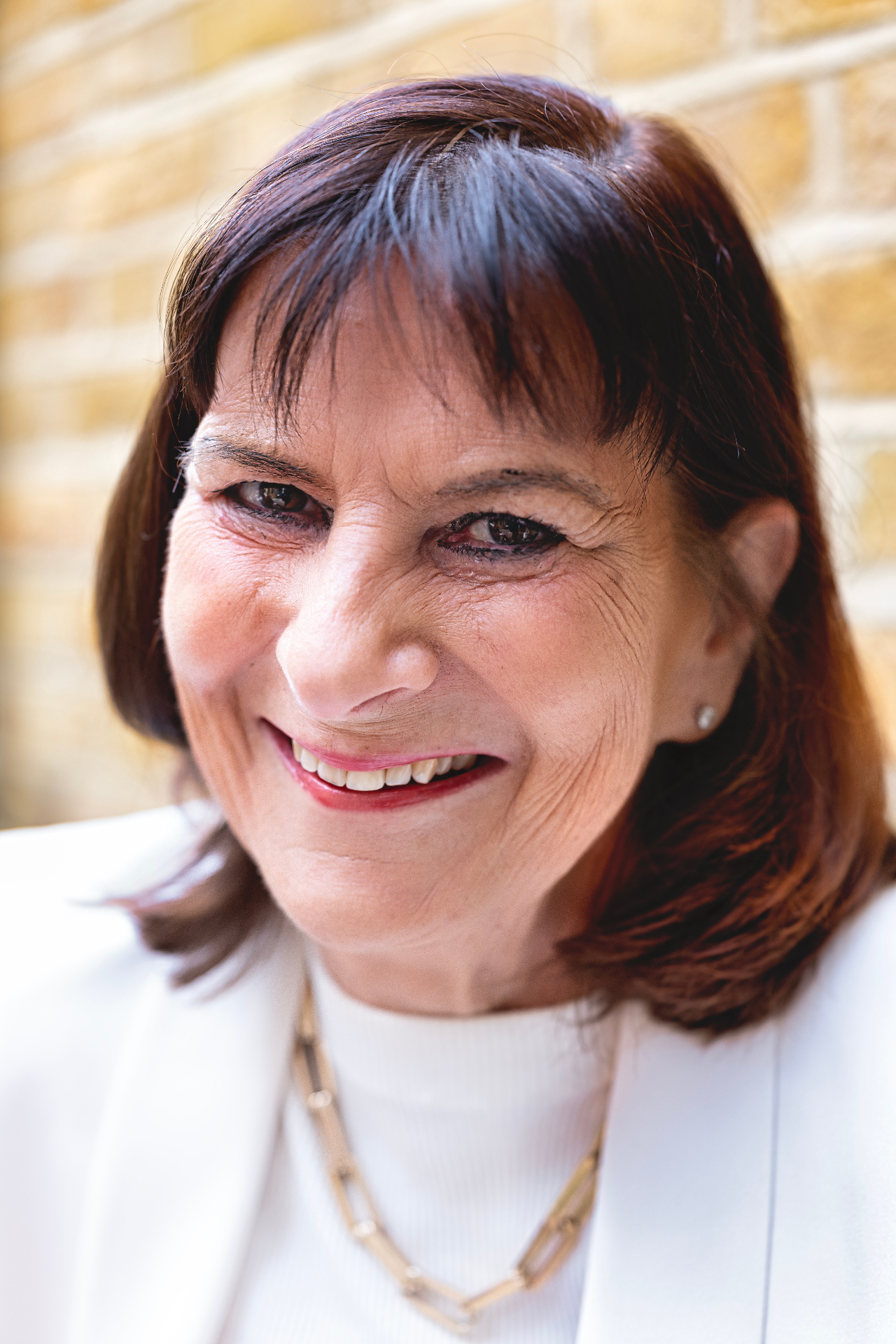
By Victoria Tomlinson
Originally written as a chapter for Expiry Date Never. A look at how universities are responding to longer lives - and where the gap still lies.
I have worked with universities for more than 25 years, first as clients and later as advisory board member and board chair. What struck me early on was how differently success is defined inside academia compared to the outside world.
Universities should have a key role in helping individuals, corporates and governments to understand longevity and ensure the world is adapting - rapidly - to create opportunity not risk. This chapter examines what is happening and how the reality has a way to go.
I remember a board dinner where Dr Nigel Lockett (now professor) explained how research quality is judged in the UK. The most highly rated work was not necessarily the most widely read or practically useful, but that which met the highest academic standards and was published in specialist journals (which are read by very few people - at times only handfuls). Impact on business, policy or society was, at the time, a secondary consideration. I remember my jaw dropping - as did those of my fellow private sector board members. It felt alien to us.
The rules have shifted somewhat. Universities are now required to demonstrate impact beyond academia, and that is a positive step. But the underlying tension remains. Blue-sky thinking is vital, yet too much research still feels disconnected from the realities faced by employers, governments and individuals.
We saw this with AI. Universities led on the technology, but were slow to engage with its organisational, ethical and societal implications. The risk now is that longevity follows the same path. Research into ageing is strong in medicine and psychology, but the implications for work, leadership, learning and policy remain fragmented.
We risk knowing how to extend life without knowing how to use the extra years.
In a world shaped by AI and longer lives, universities need to move faster, think broader and engage far more directly with the world beyond campus.
The global university response to longevity
Some of the most thoughtful work on longevity and later-life contribution is now coming from universities, and much of it has been surfaced through 4-Quarter Lives, a podcast by Avivah Wittenberg-Cox. I cannot recommend her work or this podcast highly enough. Through interviews with leading institutions around the world, Avivah highlights a growing recognition that longer lives demand new ways of thinking about purpose, leadership and contribution.
What stands out is not one model, but a shared intent. Programmes such as Stanford's Distinguished Careers Institute, Harvard's Advanced Leadership Initiative, Yale's Experienced Leaders Initiative, Chicago's Leadership & Society Initiative and St Gallen's NEXT: Design Your Future all help experienced people step back, reflect and redesign the next 20 years of their lives. Many focus explicitly on purpose, societal impact and contribution beyond paid employment. They are, in effect, longer, more immersive versions of the two-day workshop we have designed for professional firms and corporates.
I find these programmes inspiring. They take individuals seriously at midlife and beyond, and they legitimise transition as a skill. But they are exclusive and they also highlight a gap.
Alongside this, I ran a small experiment of my own. I contacted senior academics I have worked with over many years, now Deans and Heads in some of the UK's leading business schools, and asked a simple question: how do you incorporate longevity into teaching on strategy, economics, leadership or HR? The answer, consistently, was that they largely don't.
This is the paradox. Universities are doing excellent work at the edges through specialist centres and elite fellowships. Yet longevity is still rarely embedded in the core disciplines that shape how organisations are run and how economies function. Business schools, in particular, lag behind, despite theoretically being closest to employers and the world of work.
The opportunity now is to move from pockets of brilliance to mainstream relevance. Longevity cannot remain a niche topic. It needs to sit alongside AI, sustainability and productivity as a defining challenge of our time. Universities that make that shift will not only stay relevant; they will help shape what good work, leadership and contribution look like in a 100-year life.
Case study - Vince Pizzoni: Five generations achieve outstanding university employability records
Vince Pizzoni's story makes one of the strongest, evidence-based cases for using the unretired generation that we have seen. (We don't know if they took the idea from the University of Pittsburgh or vice versa - or pure coincidence, but either way it's a great story.)
Vince graduated from the Chemical and Environmental Engineering (CEE) Department at the University of Nottingham in 1976 and was delighted when nearly 50 years later, the university invited experienced industry professionals back to support students with technical projects, PhDs and employability.
When these industry leaders graduated, the CEE department had around 100 students, nearly all male and from the UK. Now there were 7-800 students, roughly 35% female and far greater international and socio-economic diversity.
Initially there were only a few industry professionals involved, working typically two to four days a week. Their ages ranged from the late 50s to the mid-80s, and more recently the group has expanded to include a woman in her 30s. Together with academic staff in their 20s to 50s, and students aged roughly 18 to 30, the department now spans five generations working alongside one another.
From Vince's perspective, the value is clear. He says, "Students gain access to what we estimate as around 250 years of combined industry experience - knowledge of how careers unfolded, how organisations really operate and how decisions to employ people are really made."
Vince himself has worked across more than 60 countries, progressed from graduate engineer to executive, served on boards and spent time in executive search. Within the department, his primary focus is employability, mentoring students from their first days at university through to graduation and beyond as alumni.
The exchange, however, is not one-way. Vince is a strong advocate of reverse mentoring. Students bring technical knowledge in areas such as AI, coding and emerging technologies, often far exceeding that of older generations. They also bring fresh perspectives and a willingness to challenge assumptions. Vince describes his students, "They are highly innovative, regularly proposing ideas that more experienced professionals might miss through habit or groupthink. I have also learned about the pressures students face today, including mental health challenges that were rarely discussed when I was younger."
Relationships are built deliberately. Vince meets students within their first days at university and works with them regularly over several years. He emphasises listening, empathy and mutual openness. In his mentoring relationships, he expects learning to flow both ways, often describing his mentees as his mentors too. Trust is built by getting to know people as individuals, rather than starting with roles or career outcomes.
For Vince, this work is not a winding-down phase. After being restructured out of industry in his early 50s, he chose to reinvent his career, moving into education, executive search and portfolio work. His guiding principle, learned from his mother, remains simple: everyone is special, and everyone has unique gifts.
A global snapshot: who is doing what on longevity
Across the world, universities are beginning to respond to longer lives, but in very different ways. Here is a snapshot of global trends.
United States
The US leads on structured midlife transition programmes, mentioned above, helping experienced people redesign the next phase of life, with strong emphasis on purpose, contribution and societal impact. Arizona State University stands out for embedding longevity into daily campus life through Mirabella at ASU, an intergenerational retirement community integrated into teaching, mentoring and student experience.
Europe
Europe's strength lies in rigour and reflection. St Gallen's NEXT: Design Your Future pioneered the idea of "transition competence", blending design thinking with psychology and leadership. In the Netherlands, NETSPAR, NIDI and the Leyden Academy focus on pensions, labour markets and vitality, providing strong economic and demographic evidence. Finland's GEREC and AgeCare centres take a systems view, linking ageing, work, care and policy.
Australia and Canada
Australia is unusually strong on evidence. UNSW's CEPAR has built a world-leading body of research on ageing, work and pensions that directly informs employers and government. In Canada, Toronto Metropolitan University's National Institute on Ageing and McMaster's MIRA combine research with employer-facing practice and community engagement.
Asia
In Asia, the focus is increasingly macro and policy-led. Tsinghua and Peking University are producing influential work on the economic, financial and health implications of population ageing. In India, the Longevity India Initiative at IISc and TISS are building momentum around healthy ageing, social systems and workforce participation.
What this reveals - and the gap still to close
Bright spots exist everywhere, but most activity sits in specialist centres or elite fellowships. Longevity is still rarely embedded into mainstream business, economics, HR and leadership education - the very disciplines shaping how organisations and economies respond. Teaching still largely assumes three-stage lives, even as demographics make that model obsolete.
Turning academia into practical tools for business and governments
What excites me is the opportunity to bridge worlds. Much of the university-led work on longevity mirrors what organisations are grappling with in practice: how people stay relevant, motivated and useful across longer careers. Through Next-Up, we see daily how leaders, professionals and firms struggle with transition, identity and contribution in real time.
There is huge scope to connect academic insight with organisational reality - to translate longevity research into practical frameworks for work, leadership and lifelong contribution. Guest teaching, executive sessions and cross-sector collaboration could help bring longevity out of the margins and into the core of how we educate for modern working lives.
Case study: Paul McCormick - From the City to the lecture theatre
In his 50s, Paul McCormick had what many would call a successful City career. But after ten years at Thomson Reuters - later Refinitiv, now part of the London Stock Exchange - he began to feel stale. The work no longer stretched or excited him. "Maybe I'm done with this," he thought, "and it's time to explore something else."
Paul had always liked helping people develop. He'd coached junior hockey, taught new recruits about bond markets and mentored interns on how to write CVs and cover letters. He realised those one-to-one sessions, helping young people get started, were the part of his job he genuinely loved.
So he began to experiment. With the help of his tech-savvy nephew, Paul started a blog giving practical advice to students and graduates on job-hunting - from how to structure an interview answer to the best ways to make a good impression. At first, a good week meant 20 readers. Slowly the numbers grew and so did his enthusiasm.
He began giving talks at universities, starting with Exeter where his son studied, then at the London School of Economics and Imperial. The audiences were tough, bright and curious - and Paul found himself energised again.
Through these talks he was introduced to staff at Lancaster University, who invited him to share his real-world experience with students in finance. He began part-time, balancing it with his corporate role, until redundancy came knocking. Rather than resist, Paul volunteered to leave. "I decided to go for it," he says. "It was still a big test of confidence after 30 years in the corporate world, but it felt right."
What began as guest talks grew into a new career. Paul built a small company offering coaching and workshops to universities. Then Lancaster University called him with an emergency - the lecturer who taught a fixed-income module was sick.
Could he take over? He felt he could do half - and Lancaster found someone for the other half. This went so well that Lancaster then asked him to write and deliver a whole course on bond markets - first as a trial, then every year. "The students loved hearing from someone who'd actually worked in the markets," he says. His class grew from 40 to more than 260 students and his inbox filled with messages of thanks: you changed my life; I got my dream job.
Now in his 60s, Paul divides his time between teaching, coaching and his passion for ballroom dancing. He works flexibly, travels when he wants and feels more fulfilled than ever. "This has given me huge purpose," he says. "Happiness comes and goes, but purpose and meaning stay."
His journey shows how reinvention isn't about abandoning what you know - it's about redirecting it. Paul didn't need to start from scratch. He simply took the best of his City experience and used it to open doors for others.
What needs to happen next
Longevity is not a niche topic. It is now a defining factor in productivity, careers and national resilience. Universities have pockets of excellence, but the gap is mainstreaming.
- Stop treating longevity as a specialist centre issue. Embed it into core teaching in strategy, leadership, economics, finance, HR and public policy.
- Teach "transition competence" as a capability. Make reinvention, portfolio careers and identity shifts normal topics, not personal crises.
- Design learning for a 60-year working life. Move from a front-loaded degree model to modular, flexible, repeatable learning across adulthood.
- Integrate AI and longevity into every discipline. Not as electives, and not only in computer science. These forces shape how decisions are made in every sector.
- Use the experienced generation as capacity. Build structured roles for mentoring, coaching, project challenge and employability support, with reverse mentoring built in.
- Measure impact differently. Reward work that changes employer behaviour, improves employability outcomes, influences policy and creates usable frameworks, not only journal prestige.
- Build real bridges with employers and government. Co-design curricula, share data, pilot interventions, and test what shifts outcomes at scale.
The opportunity
Universities can be one of the most powerful forces in making longevity an opportunity rather than a risk. But only if they move from pockets of brilliance to mainstream relevance, at speed.
What this means for you
If you are a 50+ individual
Could you form a relationship with your old university, college or school? Start small - a conversation, a talk, a project and see where it leads.
- Contact old university/college friends (LinkedIn should do it for most). Ask them if they would like to go back to your old place and offer support.
- Read these case studies - David Patient, Paul McCormick, University of Pittsburgh, Vince Pizzoni, Rod Roman - and discuss as a group. Could you offer to do anything like these? Or your own ideas.
- Contact the VC or Principal and suggest a meeting. Offer to start small with one project, analyse learnings and see if you can extend.
If you are a university, college or school leader
Reverse the alumni relationship. Start by engaging former students, get them involved and a sense of purpose - and maybe donations will follow.
- Review all your courses. How have longevity and AI been built into all of them?
- Ensure training includes longevity and AI.
- Find a recently retired leader to help you with this and embed longevity and AI across the university in everyday life. Get them to bring in business leaders to work with all relevant departments.
Enjoying these ideas?
Buy the book, or leave your email to hear first about new stories, case studies and events from Expiry Date Never / Next-Up Ltd.